
What we cover in the workshop.
Two days of structured, hands-on learning. Every topic connects to a practical skill you can apply in your store starting the following Monday.
Saturday: Paper First
We begin with the notebook because it is the foundation. Digital tools work better when you already understand the underlying logic on paper. Saturday is about building that foundation deliberately.
Setting Up Your Sales Ledger
Participants create their own ledger format in a notebook. We cover the essential columns: date, item sold, quantity, selling price, and cost price. The format is simple by design so it can be maintained consistently without becoming a burden.
Recording Daily Sales Accurately
Using sample transactions from a typical sari-sari store, participants practice entering records in real time. We discuss common mistakes: forgetting credit sales, skipping small items, and recording selling price without the cost. Each mistake is addressed with a simple fix.
Cost of Goods: What You Actually Paid
Understanding cost of goods sold is the single most important skill in this workshop. We walk through how to determine what you paid for each item, how to account for partial units, and how inconsistent purchase prices affect your profit records over time.
Calculating Daily Profit
With sales and costs recorded, participants calculate their first daily profit figure. We introduce gross profit and net profit as separate ideas, then show how daily expenses like transportation and packaging affect the final number. Everyone completes a full practice day before leaving.
Sunday: Digital Tools and Patterns
Sunday builds on the paper foundation. We introduce mobile apps as a complement to the notebook, not a replacement. Then we look at how to read the data you have been collecting to make smarter restocking decisions.
Free Mobile Apps: Setup and Daily Use
We cover two free apps that work well for small retail tracking. Participants install the apps on their own phones, set up a sample store, and enter yesterday's practice data. The focus is on building a habit of daily entry rather than mastering every feature the app offers.
Business Money vs Personal Money
This session addresses one of the most common financial problems for small store owners. We introduce a simple envelope or account separation method and explain why mixing funds makes it impossible to know whether your store is actually profitable. No bank account is required to apply this method.
Reading Sales Patterns for Restocking
After several days of tracking, patterns emerge. Some items sell out every Tuesday. Others sit for two weeks. We show participants how to spot these patterns in their own records and use them to decide when and how much to restock, reducing both stockouts and overstocking.
Building Your Weekly Review Habit
The final session is about sustainability. We design a simple weekly review checklist that each participant takes home. The goal is a fifteen-minute Sunday review that keeps your numbers current without requiring hours of effort. Participants leave with a personalized system ready to use.
Materials included with the workshop.
Reference Sheet Pack
A set of printed reference sheets covering the profit formula, ledger column guide, and weekly review checklist. Designed to be kept near the register and used daily.
Practice Notebook
Each participant receives a notebook with pre-drawn ledger columns for the first thirty days. After that, you can replicate the format in any ordinary notebook.
App Setup Guide
A printed quick-start guide for each of the two apps covered in the workshop. Includes screenshots of the key screens and a reminder of the daily entry routine.
Follow-Up Resource Email
One week after the workshop, participants receive a follow-up email with links to additional free resources and a reminder checklist for the first month of independent tracking.
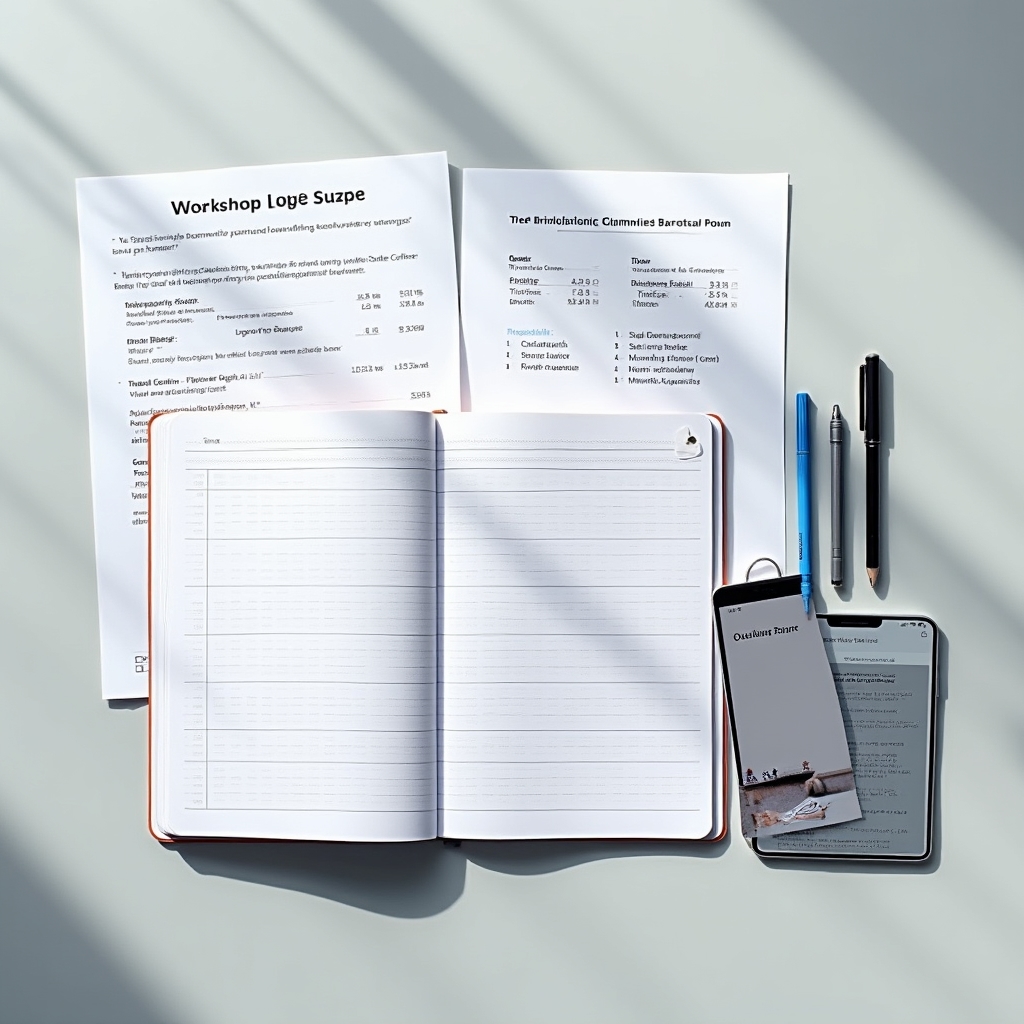
The take-home reference pack participants receive at the end of Sunday's session.
Educational Content Only
All workshop content is general financial literacy education. Nothing in this workshop constitutes accounting advice, tax guidance, or professional financial consultation. The skills taught are for personal use in managing your own store records. PrimeWave Digital does not provide any regulated financial services.
Have questions about the curriculum?
Reach out through the contact page and we will respond with details about upcoming sessions and how to register.